Cutting Edge Interpretive Planning - Mass
Customization, Experience Economy, Markets of One and More.
JVA is the first interpretive planning and training firm to have been
incorporating experience based and outcome based interpretive planning to all of our
projects. Here is an article we developed on this topic. Feel free to contact
me if you would like the printed version: jvainterp@aol.com

Experience and Outcome Based
Interpretive Planning -
Mass Customization, Markets of One and more…
By
John A. Veverka
Moving forward while standing still? In preparation for developing this article on
new cutting-edge approaches to interpretive planning, I spent some time looking through
the now many text books on interpretation to see "what was new". What I found
was new ways of saying "old ideas", or more complex ways of presenting simple
concepts and more convenient ways of getting the message out. While our visitors to parks,
museums, historic sites and related interpretive attractions have change greatly in
"why they visit" over the last few years, we have generally fought to keep pace
with our interpretive planning strategies to meet visitors changing needs, interests, and
their search for memorable "experiences". And the word "experience" is
the key to interpretive planning for programs or services, or interpretive master planning
for parks, historic sites, or even regional interpretive systems planning. It’s time
to update interpretive planning for today’s visitors.
Stuff based interpretive planning has been the norm. There seemed to be more effort
in planning where and what interpretive media we would use, than consideration of "is
that what the visitor wants or needs"? And many interpretive plans ignore the
visitors except for basic demographics. I think that often we forget that the purpose of
the interpretive plan is to eventually be implemented! And successful implementation
involves accomplishing meaningful objectives related to "does the visitor get
it!" about your site’s story. Do their on-site experiences relate well to our
desired "outcomes" from those interpretive experiences? Today’s
interpretive plans need to focus on accomplishing this.
One planning philosophy we promote is that you should be able to demonstrate how every
dollar spent on your interpretive programs and services will yield about five dollars in
benefits. These are benefits for the organization, resource, your mission, and most
importantly, to your visitors. To accomplish this goal we need to consider content
additions to interpretive plans. These benefits can be both tangible and intangible. For
example benefits might include: reduce littering or solving management problems,
recruiting more volunteers, increasing revenue, broadening appeal, building support in the
community, providing more cost effective media and services, increasing visitation, and so
on. This is how you argue for funding for implementing the plans recommend development,
media and services – what will you get in return from your interpretive investment.
Does your plan do that?
The next big thing we have been working on in our interpretive planning and
training courses, is adding the elements of experience based and outcome based
interpretive planning strategies. Besides the inventory of interpretive resources such as
geological, historical, ecological features, etc. we have also included an
"experience inventory" based on the book "The Experience Economy"
by Joseph Pine and J. Gilmore. Essentially what we know is that different sets of
experiences will attract or discourage visitors who are looking for a particular set of
experiences.
Let’s take a look at the experience model (Figure 1) and I’ll give some
examples as it applies to interpretive planning and marketing interpretive programs and
services.
Essentially Pine and Gilmore illustrate that there are four basic ways of engaging in
experiences you seek out or take part in:
Passive Participation – watching an interpretive amphitheater program for
example.
Active Participation – taking part in a hands-on interpretive demonstration or
activity.
Immersion Experiences – being in the forest, on a lake, in a historic home,
scuba diving.
Absorption Experience – this is where you are so focused on the experience
like watching a great play or movie that you forget about time (day dreaming while driving
– ever miss an exit?).
Now, there are also four basic kinds of experiences you can engage in. You may be
looking for:
Entertainment experiences – like going to a movie, playing a video game or
watching a living history program.
Educational experiences – you want the experience to teach you something,
challenge critical thinking and puzzle problem skills, or you want to learn a new skill or
advance your knowledge level of a subject.
Esthetic experiences – watching the sun set, looking at and smelling
wildflowers, being in and looking at a garden, visiting an art gallery (which could
combine many different experiences).
Escapist experience – going on a long hike where you won’t see another
person – taking a canoe trip or getting lost in a good book.
To me this is one of the most important aspects of any interpretive plan – what
experiences do you offer, or want to offer? We do an experience inventory as part of the
total plan interpretive inventory to address this issue and how it may affect current or
future visitation or market shifts.
Now we know that visitors don’t usually come to interpretive sites for just one
experience nor do they come alone. I often think "if I brought my family" would
there be something for everyone; mom, wife, daughter, son and I? The visitor may want an
educational interpretive walk that is also entertaining (edutainment) in the morning, want
to watch a demonstration in the afternoon, and just enjoy the sunset in the
evening. If you’re developing an interpretive program schedule – do you have
just one kind of experience you’re offering or a diversity of experiences?
Here is how it works in simple terms: The kinds of experiences you offer at your
interpretive site or facility is often directly related to the kinds of audiences you can
attract that "want" that kind of or mix of experience!
If you want to attract new or different audiences or age groups, you have to add or
modify new kinds of experiences different market groups would have an interest in as
appropriate for your site.
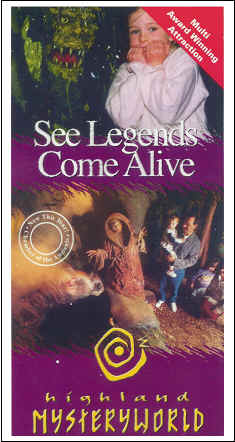
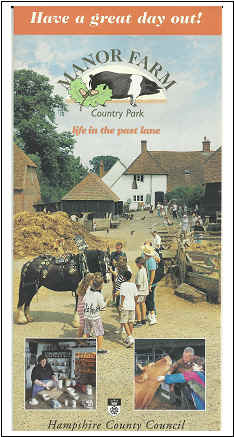
If you look at advertising for interpretive sites you can see how that works. Here are
two different brochures. What experiences are they offering and to which market groups?
So, in general, as part of cutting edge interpretive planning we now spend a lot of
time in looking at authenticity, experience realms and experience inventories as part of
our audience needs and marketability for interpretive programs and services –
interpretive planning for new experience mixes.
The Importance of authenticity should be noted here. My associate Matt Kaser
reminded me of this important aspect of our interpretive planning. " I remember
reading Josephs Pine where he mentions the highly and masterfully designed recreation of
things. When the dad says to his son "we are going to see a real ship wreck" and
the boys says " oh like in the movie..., or like the Pirates of the ... at Disney, or
the haunted house, or the family entertainment center, etc.) In Mass customization idea I
often think of the phrase – ‘The truth remains consistent, no matter how fine
you sift it’. Interpretively speaking, the story and theme remains consistent no
matter how you divide it up or repackage it ... because it is authentic, rooted in
truth, rooted in the inherent resource."
But there’s more. Related to the kinds of authentic experiences visitors may
seek, we have to add in the kinds of interpretive program topics that visitors may
have an intrinsic interest in as part of the draw too. I learned from my MS thesis on
"Visitor Motivations for Selecting and Attending Interpretive Programs" many
years ago that different sexes and age groups like different program topics and different
program delivery methods (experiences) for different reasons, which I have to add into the
interpretive planning process. This can be accomplished with a survey of current programs
or services and proposed new programs or services and having visitors’ select their
topic choices for programs they have the most interest in attending and why?
For example, of the 30 program topics I surveyed, I found that visitors over 45 years
of age, for example, had an interest in a program topic on "what your family
can do to help the environment" – but they wanted hands-on
examples they could do at their own home in the program content. Visitors under 45 years
old wern't’t much interested in that topic. The program topic "Snakes the deadly
hunters" was preferred by visitors under the age of 25 for esteem motives (and
edutainment), while visitors over the age of 25 wanted to learn safety tips for avoiding
snakes in the park. One audience but with a mix of different desired outcomes from the
same program. Mostly women preferred the first program on the environmental issues while
mostly men wanted the program on snakes. So program topics and the experiences and motives
associated with their selection enter into the interpretive plan and marketing mix.
That’s just a taste of these new elements required for professional interpretive
planning. Now let’s look at "Mass Customization" for interpretive planning
strategies and program/services offerings.
One size does not fit all in interpretive planning! When I first read the book The
Experience Economy, there were also companion books recommended. They included:
"Mass Customization" and the book "Markets of One". While designed for
the retail and tourism markets, their ideas have direct implications for interpretive
planning as well. I have been incorporating these concepts into our interpretive plans for
several years now, and here is a summary of how they work.
Mass Customization in interpretive planning involves looking at the wide range of
interpretive programs, services and topics that visitors might want to experience, learn
about and enjoy. But in interpretation one size does not fit all. For example, most
self-guiding trails have only "one" story or theme, and if that one story or
topic is not to your interest, you might walk the trail, but not use the interpretive
media. The interpretive content might be too simple, too complex or cover a topic
they’re not interest in. With mass customization as part of an interpretive plan, we
can phase in 10 or more different interpretive trail guides for "one" trail.
For our example here we could have many trail guides based one general theme like
"Our forest landscape is always in a state of change.", but we can have many
different self-guiding topic options to illustrate that theme such as:
- Our forest landscape…. (guide for spring, summer, fall, winter).
-(guide for introductory, intermediate or advanced interpretation/knowledge of the
topics)
-(guide in 2-3,4 or more different languages)
- (guide for wildflowers, trees, succession, land management, etc.)
This range of guides could all be for the same trail. The guides would exist on your
web site as a PDF for printing from a computer or be downloaded to a smart phone. They can
exist as a printed guide, and audio guide, or a video guide. The visitor could
"customize" the season, complexity, language and media (printed, smart phone)
they want the guide to provide based on their interest or needs from a trail guide web
based library or docking station.
Now imagine if you had more trails, each with many different themes, adaptations,
learning styles and levels, and experiences. More mass customization – a interpretive
shopping mall of individualized opportunities for visitors to discover and experience your
stories based on each visitors unique needs, interests and learning styles (Markets of
One). We recommended this approach to a Natural Trust Historic Home a while back
were you could have printed guides for the standard tour route, but have different
subjects presented for the same room, depending on who the audiences were. You could
have, for a family for example, a guide on the art being displayed, the furnishings, the
lifestyles of the owners vs the life styles of the servants, a children's guide, and
experts guide, and so on. So essentially a group of people could move through the
home on a self-guiding tour and be having different subjects interpreted to them based on
their personal interests and knowledge level.
For larger projects, like the 500 mile long Susquehanna River Greenway Interpretive
Systems Plan in Pennsylvania we developed a few years ago, the mass customization
matrix included over 200 different interpretive sites, museums, parks, and related
heritage areas that could be developed/marketed for Greenway wide auto tours, bus tours or
theme/topic based tours or events. Each interpretive experience could be customized to the
user’s interests, knowledge levels and experience types ready for them to find and
select at the Greenway web site (currently in development).
The mass customization interpretive planning inventory and assessment for each
individual site selected along the 500 mile long Greenway included:
- Main interpretive stories or topics or resources the site presented.
- Current experience opportunities at each site.
- Quality of the interpretive resources/experience (best example, average example, most
accessible example of a particular category, such as civil war sites, environmental
sites, railroad history, canal era history, etc.
- Analysis of existing interpretive media or services.
- Recommended new interpretive media, services and experiences.
- Tourism readiness issues (tour bus ready, up to 30 visitors at one time, only 5-10
visitors like for a historic home tour, or not tourism ready) The data from all the sites
were then summarized in a variety of mass customization matrices including:
- Site by topic (railroad, historic home, scenic vista, natural history features, etc.)
- Site by tourism readiness.
- Site by interpretive media or experiences.
- Site interpretive media implementation priority and costs.
When the mass customization matrices were completed they gave us a big picture of just
what were the main interpretive topics, stories, resources and interpretive development
opportunities for the whole 500 mile long Greenway corridor, their quality, and how
we might be able to connect them for developing different themed and customized
experiences.
How would we use this? If a visitor was interested in historic cemeteries for
example, they could click on a search engine at the Greenway web site for historic
cemeteries and all the cemeteries that were available for interpretation, their key
stories or residents, web sites, locations and any interpretive materials would pop up.
This person (or group) could then plan a historic cemetery tour through the Greenway. The
same for any other topic such as historic homes, railroad history, Civil War sites, and so
on.
The tourism readiness analysis gives future planners for tour bus route
development and auto tour development a list of what different interpretive heritage sites
could handle for visitor numbers. This ranking also included such issues as wayfinding,
restroom facilities, hours of operation, and related logistic information.
It allows visitors traveling to, or living in a very large region, like a National
Heritage Area, the ability to easily "customize" their visit based on the topics
they are interested in and the kinds of experiences they are looking for.
The Quest for Outcomes is one of our main goals in interpretive planning, and the
essence of outcome based planning. The interpretive plan has to provide the information
and strategies (short and long term) to actually accomplish something, both tangible and
intangible. What we look for in our interpretive plan outcomes includes, but is not
limited to:
- Are learning, emotional and behavioral objectives actually being accomplished both
for the total plan and organization, as well as for individual resources or features
within the site?
- Getting $5.00 in benefits for every $1.00 spent on implementing the interpretive
plan. This seems to always be left out of interpretation planning, but is our best arguing
point to keep interpreters from being "let go" when budgets are cut.
Interpretation should create more benefits than it costs whenever possible and
interpreters need to be able to justify their work and benefits in real dollar terms.
- Sustainability – ensuring the resource with its unique place and message will
live on and on for future generations. Sustainability
will result by default if the Interpretive Planner stays true to the "rule" and
tells the truth (maintains authenticity for the site story and its presentation or
experiences). Truth is always stranger than fiction. Such trends of laser discs, slide
shows, stiff mannequins, etc. will come and go and be replaced by new delivery systems,
like the iPhone, but the authenticity remains.
- Attracting more general visitors, more theme based visitors, or more experience based
visitors based on your mission and resources and more mass customization opportunities.
More diversity in topics and experiences creates more diversity in visitors and
visitor numbers.
- Making more income from interpretive programs and services (experience based) –
including more memberships and membership renewals based on the organization offering a
wider range of experience opportunities to constantly changing visitor visitor needs and
interests.
- Making our interpretive messages more "memorable" – we remember 10% of
what we hear, 30% of what we read, 50% of what we see and 90% of what we do. Experiences
translate to memories, both bad or good ones. And visitors tend to remember bad ones for a
long time. Interpretive planning needs to take an offensive approach of anticipating
problems and issues in an interpretive plan before they occur and try to "plan them
out" while planning for more positive experiences and memories.
- Making our interpretive messages "exportable" – visitors can actually
use the information and inspiration from the interpretive experience beyond the park,
historic site or facility boundary at their own home, community or in future interpretive
experiences elsewhere. As an example, an interpretive program that names the trees
in a forest walk, trees that visitors might not ever see again, may only be of use in
interest in that park - but how would I "use" that information from the program
- while a program with a theme on "Trees make your life better" is
exportable as it can encourage visitors to plant a tree at home and value their own
native trees (an exportable outcome).
All this fits into our general Interpretive Plan Outline and are integrated into the
content of the interpretive plan. A copy of this outline is available at the JVA website.
For years interpretation and interpretive planning has focused on the same content, and
many plans focus mostly on the design and location of interpretive "media"
without asking if "that’s what the visitors really wanted or needed" and
how will this enhance the total site experience or create real outcomes? And we’re
not leaving Tilden behind – the principles of provoke, relate and reveal and the use
of tangible and intangible concepts are imbedded in all the final presentations and
delivery media the interpretive plans recommend. That’s what makes the interpretive
plan "interpretive". But we must also use those principles in planning to create
a diversity of interpretive experiences – to expand interpretive market groups, and
to see visitors not as numbers but as a collection of unique individuals with a
wide range of interpretive topic and experience interests and desires.
It’s time to ask our visitors what they want, need or attracts them to our
facilities and integrate our visitor research into creating new experiences for diverse
audiences into our interpretive plans. Movie theaters have learned no matter how nice the
theater looks, you have to change the film and movie watching experience to keep them
coming back. What kinds of experiences do your visitors want? If your numbers are down, it
might just be related to the experiences you are NOT offering. So part of
interpretive planning is, whenever possible, to look at visitor surveys in new ways -
topics and experiences by age and genders to see what your visitors really want from their
experiences with your site and services.
Summary
This short article provided a general summary of some new interpretive planning
concepts from other retail and marketing sources that have direct implications for
interpretive planners. We have been incorporating these concepts of Mass Customization,
Markets of One and Experiential Marketing into our interpretive plans for several years
and found it greatly enhances the outcomes the interpretive plan, when implemented, will
deliver. We strive to meet the philosophy of "for every dollar you spend on
interpretation you should get five dollars in benefits", into each interpretive plan
strategy as well, for obvious reasons. This interpretive planning approach helps this
philosophy become reality and creates interpretive plans designed to celebrate and build
upon the great diversity of our current and potential interpretive site visitors and get
them coming back for more.
References
Gilmore, James and J. Pine. 2000. Markets of One. Harvard Business School Press.
Gilmore, James H. and J. Pine. 2007. What the consumers really want –
Authenticity. Harvard Business School Press.
Gottdiener, Mark. 1977. The Theming of America. Westview Press.
Pine, Joseph and J. Gilmore.1999. The Experience Economy. Harvard Business
School Press.
Pine, Joseph. 1993. Mass Customization. Harvard Business School Press.
Schmitt, Bernad. 1999. Experiential Marketing. The Free Press.
Veverka, John. 1978. A survey of park visitor motivations for selecting and
attending interpretive programs. MS Thesis, The Ohio State University.
Veverka, John. 2011. Interpretive Master Planning- Strategies for the New Millennium.
MuseumsEtc. Edinburgh, UK.
Thanks to Matt Kaser (Kaser Design) for his thoughtful review of
this article.
John Veverka is president of John Veverka & Associates an interpretive planning
and training firm. He is the author of a new two volume interpretive planning text book
set: Interpretive Master Planning – Strategies for the New Millennium (volume
1) and Interpretive Master Planning – Philosophy, Theory and Practice (Volume 2).
You can contact John via his web site: www.heritageinterp.com, or by e-mail at:
jvainterp@aol.com